How the platform is assembled and executed
Nexus is a statically assembled C11 MCU platform. It separates reusable mechanisms from external product policy. One authored TOML selects exact hardware and optional adapters; immutable I/O faces expose the chosen private providers. The application owns execution and recovery. These are current design boundaries, not whole-platform physical qualification.
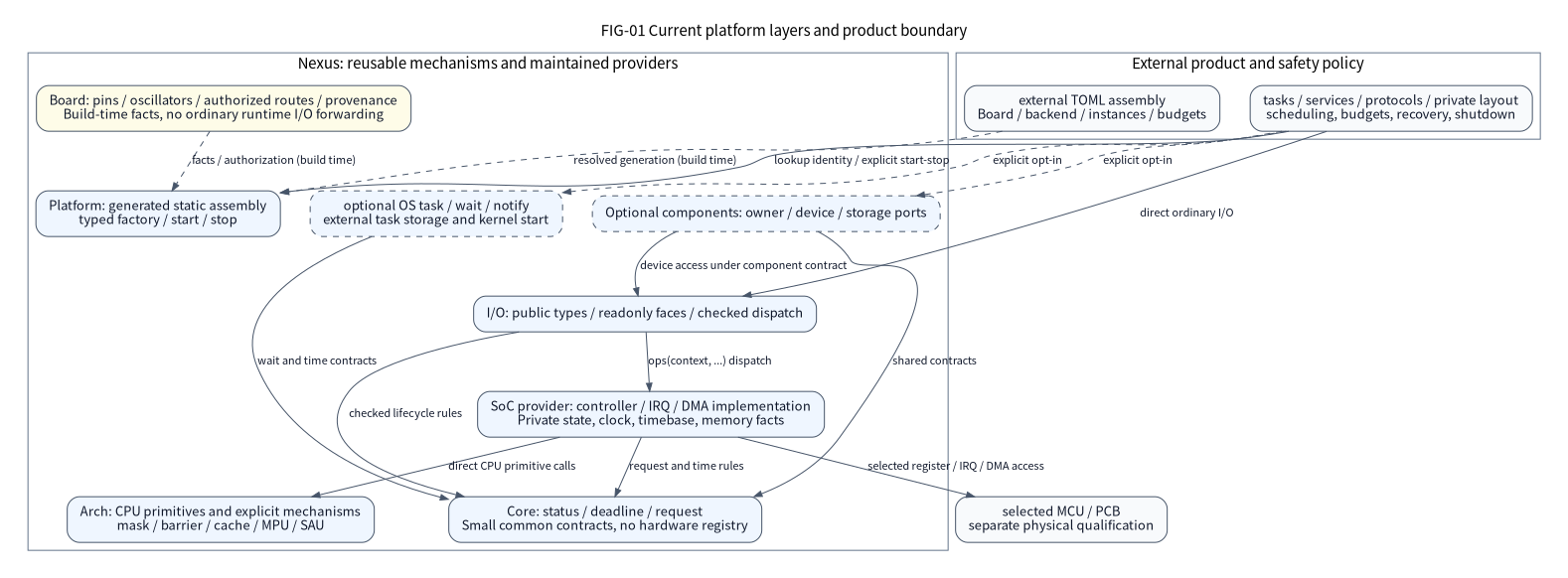
FIG-01 expresses current layer responsibilities. Arrows describe labeled dependencies or access; it is not an initialization sequence.
Layer |
State and responsibility |
|---|---|
Core |
Results, monotonic deadline, request publication and stable epochs |
Arch |
Compile-time CPU primitives; incoming masks, barriers, optional Cache/MPU/SAU |
SoC |
Exact chip clocks, memory, startup, IRQ/DMA and controller implementation |
Board |
Reviewed PCB routes, oscillator/safe-level facts and explicit unknowns |
I/O |
Typed public faces and operation contracts; no vendor layout |
Optional OS/owner |
Explicit per-object wait, task or shared-resource execution storage |
Optional component |
Bounded algorithms through narrow ports |
External product |
Main, workers, roles, private PCB, budgets, partitions and recovery |
Build-time decisions and runtime work
The resolver combines authored TOML with reviewed SoC/Board facts into immutable typed IR and an atomic bundle. It validates modes, resources, clocks, IRQs, ABI, DMA reachability and budgets. CMake owns the source dependency graph; the resolver does not discover software from device names or generate product workers.
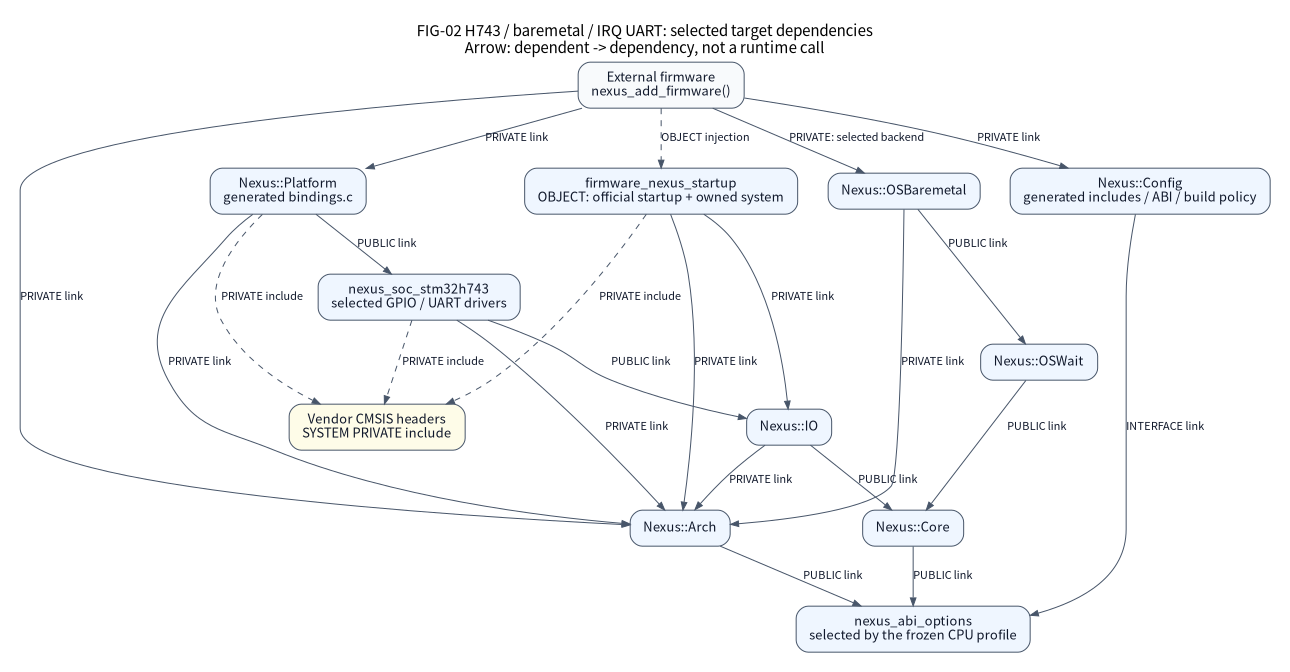
FIG-02 is the checked compile graph. Vendor and provider includes remain private; public consumers receive Nexus types and selected compile/link policy.
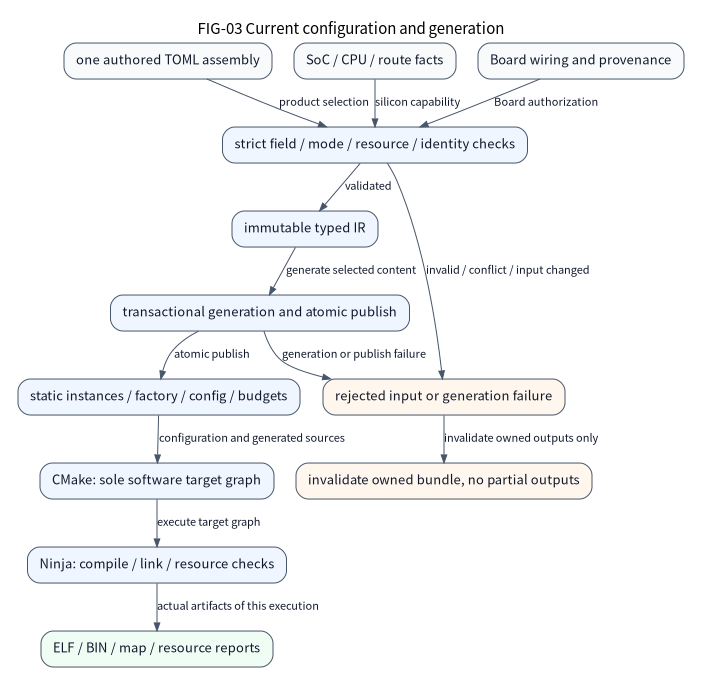
FIG-03 shows current generation. Unknown and conflicting selections fail; no Kconfig/cache/old-header fallback repairs them. Runtime factory lookup returns an existing face. After explicit successful platform start, ordinary operations call its shared ops table with its instance context. IRQ dispatch is fixed to provider instances and does not repeat factory lookup for every byte.
Lifecycle and failure responsibility
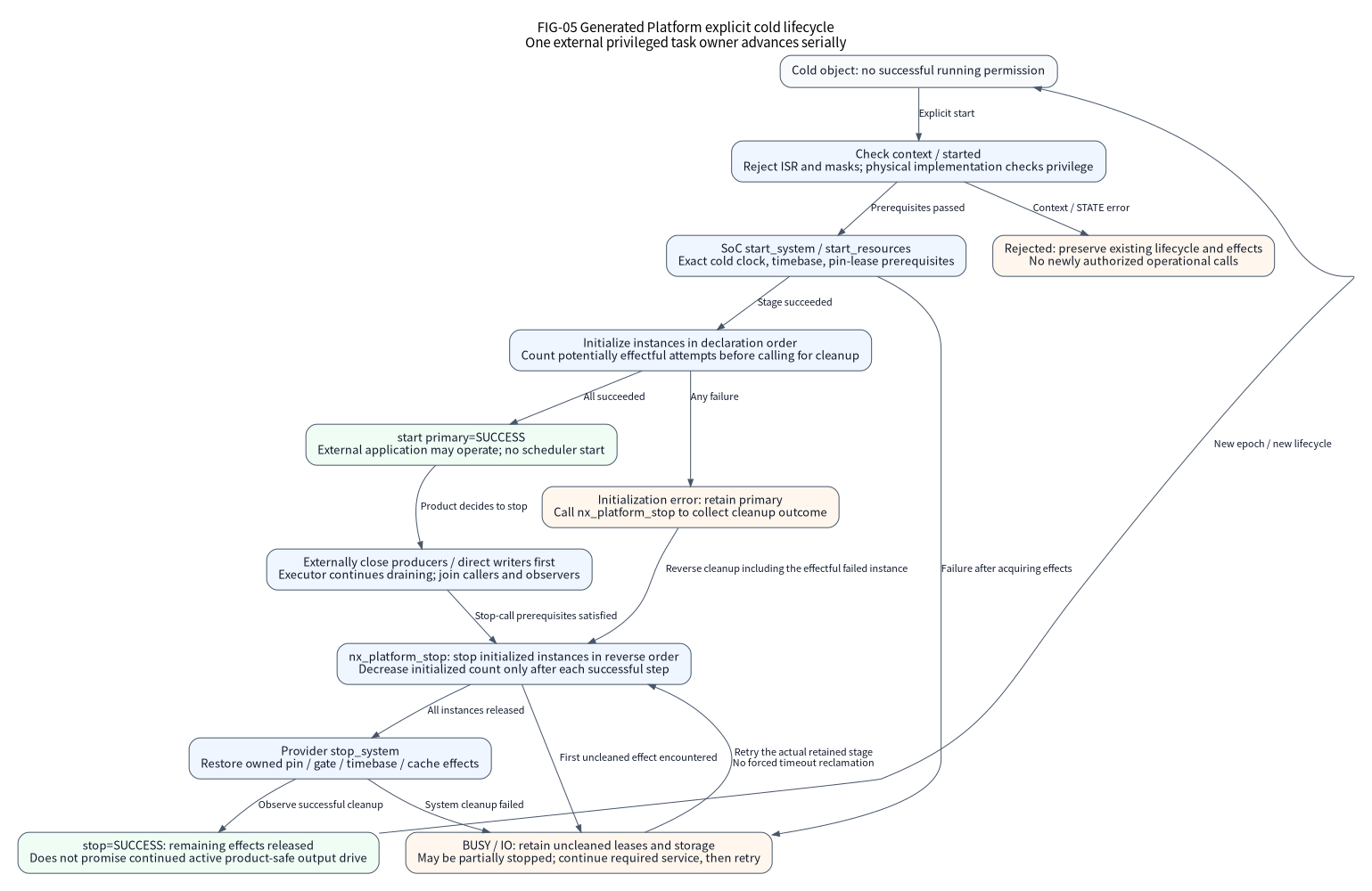
FIG-05 shows explicit startup and reverse cleanup. A static face can exist before start and after stop; its pointer is not a capability to execute cold hardware. Partial failure can retain irreversible watchdog effects or busy borrows. Products must inspect primary and cleanup outcomes, continue the real executor, and retain quarantined resources. Platform start never starts a scheduler.
Costs and tradeoffs
A 32-bit face contains two pointers: eight bytes of readonly storage. Provider/mode ops are shared; exact mutable state and selected buffers remain separate. Indirection lets one public interface serve independent concrete providers and GoogleMock ports. Its cost is one public dispatch and code/readonly table retention; actual Flash/RAM and timing are measured on the selected linked image.
Static assembly rejects conflicts early and prunes unselected drivers. It deliberately forgoes hotplug discovery, runtime string registries, arbitrary dynamic clock changes and automatic recovery policy. Optional shared owners add explicitly budgeted slots and synchronization; direct single-executor paths need no default OS lock or worker.
Read factory, ownership, the integration contract and exact support. Architecture diagrams explain mechanisms; tests, image checks and HIL establish their separate execution scopes.