Borrow, completion and observer lifetime
The caller owns request and buffer storage. Accepted asynchronous I/O borrows it; rejection does not. Cancellation, a deadline or a failed stop cannot revoke that borrow. This separation prevents IRQ/DMA or an executor from accessing recycled memory. The lifecycle contract and public operation declarations define exact context and result behavior.
Event |
Storage consequence |
|---|---|
Rejected admission |
No retained request/buffer references or residual hardware effects |
Accepted admission |
Keep request and buffers valid until acquire-observed SETTLED |
Cancel or deadline |
Request termination; continue required progress and retain borrow |
DMA completion |
Memory engine stage complete; wire/publisher references may remain |
Failed drain / QUARANTINED |
Keep storage and explicit recovery responsibility |
SETTLED publication |
Provider’s final access has ended after necessary reference drain |
Observer/control reuse |
Also detach/drain matching epochs and join observers |
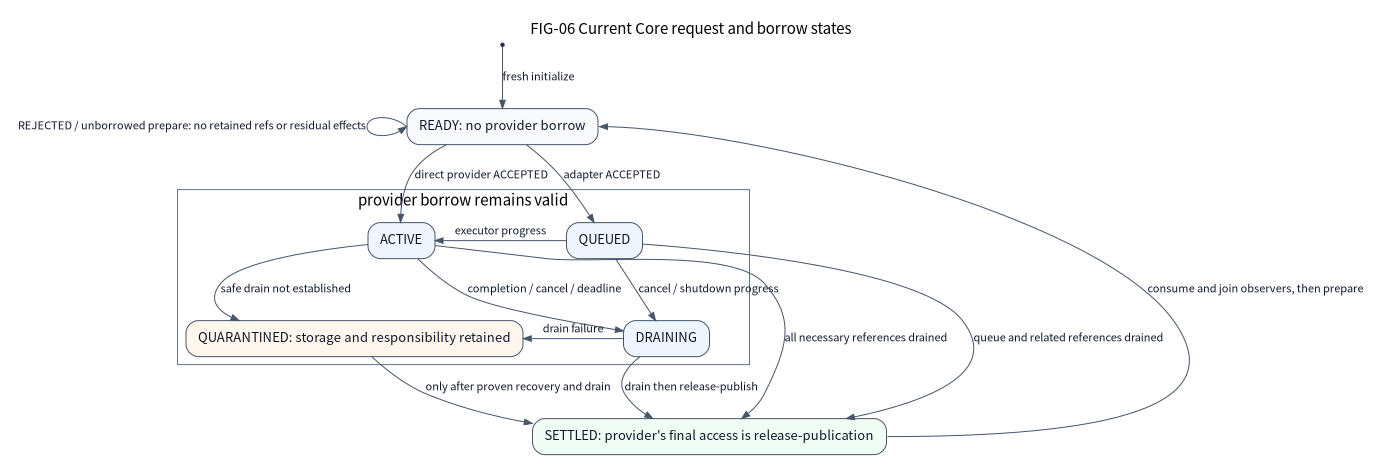
FIG-06 does not treat REJECTED/ACCEPTED as request-state enum members. Core helpers cannot observe a peripheral’s physical drain; the provider must establish that proof before publishing settlement.
Three different completion facts
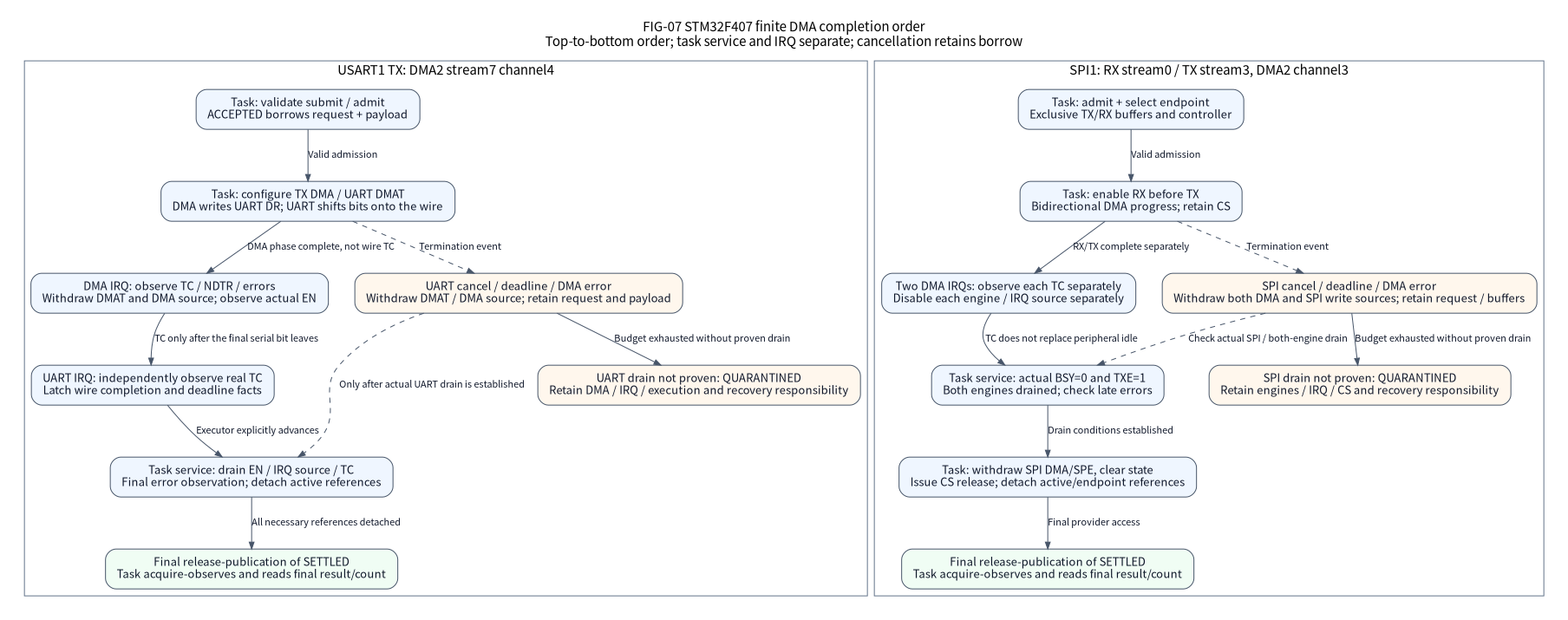
FIG-07 separates memory completion, wire completion and final publication. UART TC is not NDTR zero; SPI idle and CS interval are not a DMA interrupt. Disable and detach the actual IRQ/DMA/queue references before release-publication of SETTLED. The caller’s acquire observation then exposes the final result/count. A timeout result can be final only after this lifecycle, not at deadline expiry.
Cross-task control and continuous streams
Use stable slots plus monotonically increasing epochs for remote control. Do not send a raw pointer to storage another task can recycle. Detach control/observer references and join observers before releasing the slot and preparing the next request. A generation counter detects stale identity but does not itself join a task.
Continuous receive and ADC use explicit caller-owned block loans. A consumer keeps a block immutable until matching release. The producer needs a replacement target before publishing an old hardware bank. No replacement means visible stop/backpressure; it must never overwrite a consumer. Stop waits for filling, ready and borrowed blocks, not just active DMA. The stream contract records what loss counters and software timestamps do and do not prove.
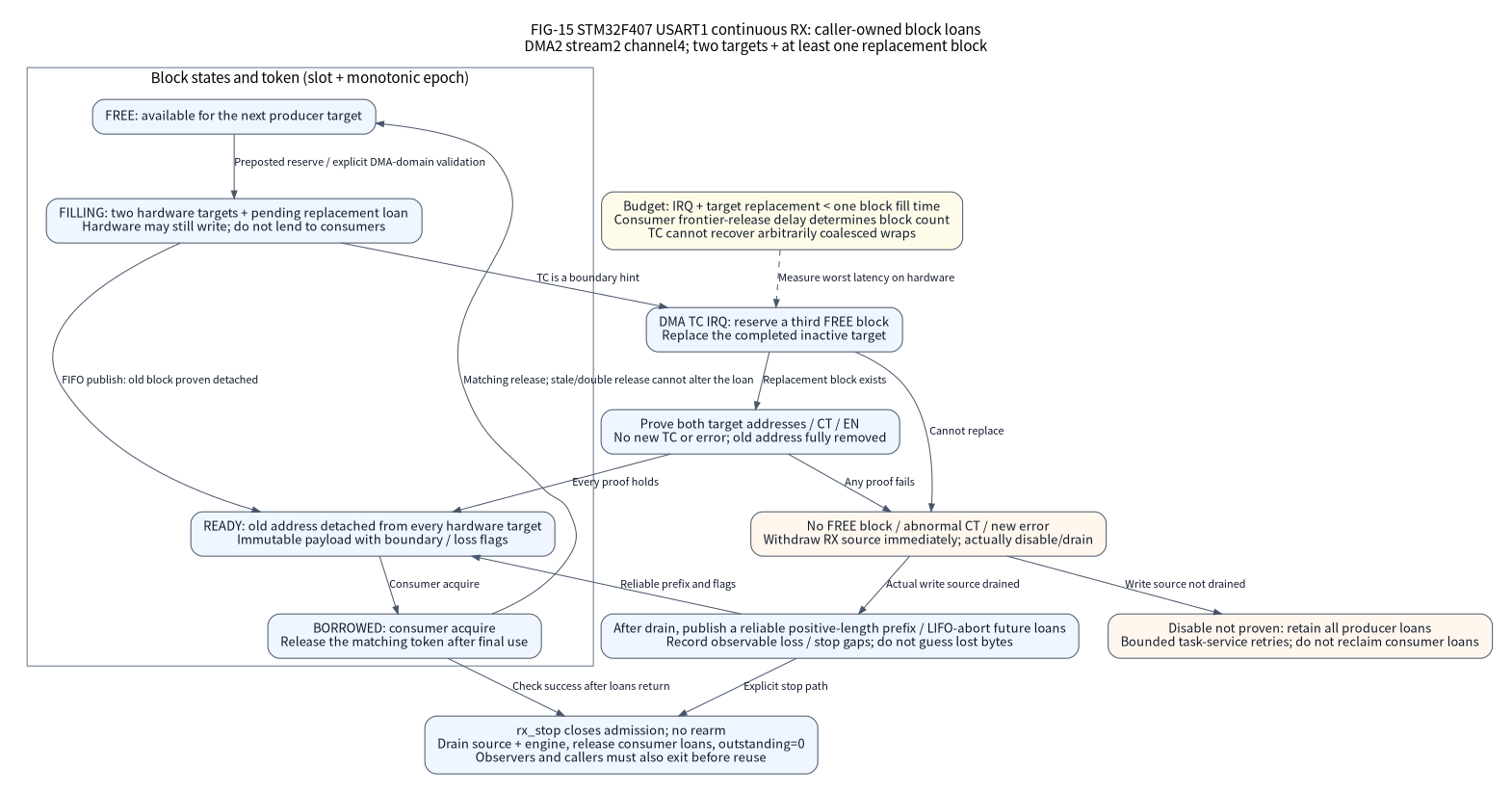
FIG-15 includes observable loss and stop/drain responsibilities. Capacity and service-latency budgets are explicit product inputs; arbitrary IRQ delay or consumer speed cannot be promised lossless. The tutorial executes rejection and quarantine; OS shutdown explains wait and join responsibilities.